
When My Brilliant Life was first published in Korea in 2011, I heard about it everywhere.
Friends recommended it. Bookstores displayed it prominently. Reviews were overwhelmingly positive.
Yet I never picked it up.
Part of the reason was embarrassingly simple: the title.
The Korean title, 두근두근 내 인생, literally suggests something like “My Heart-Pounding Life.” To my younger self, it sounded like the sort of light romantic novel aimed at women in their twenties. I assumed I knew what kind of book it was and quietly moved on.
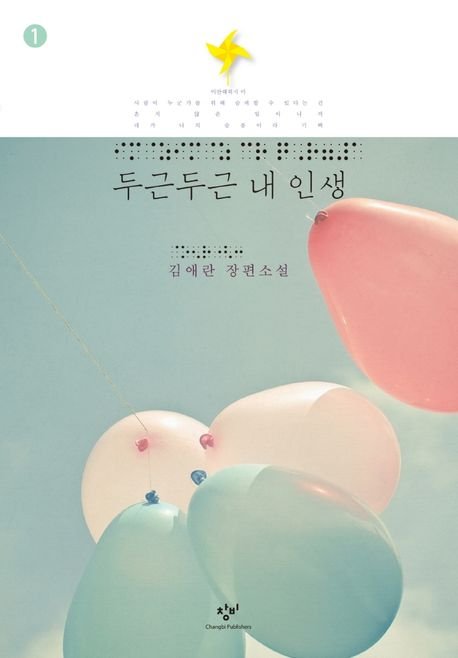
More than a decade later, I finally read it.
What I found was nothing like I had imagined.
Instead of a romance, I discovered a moving story about family, mortality, youth, and the strange beauty of an ordinary life lived under extraordinary circumstances.
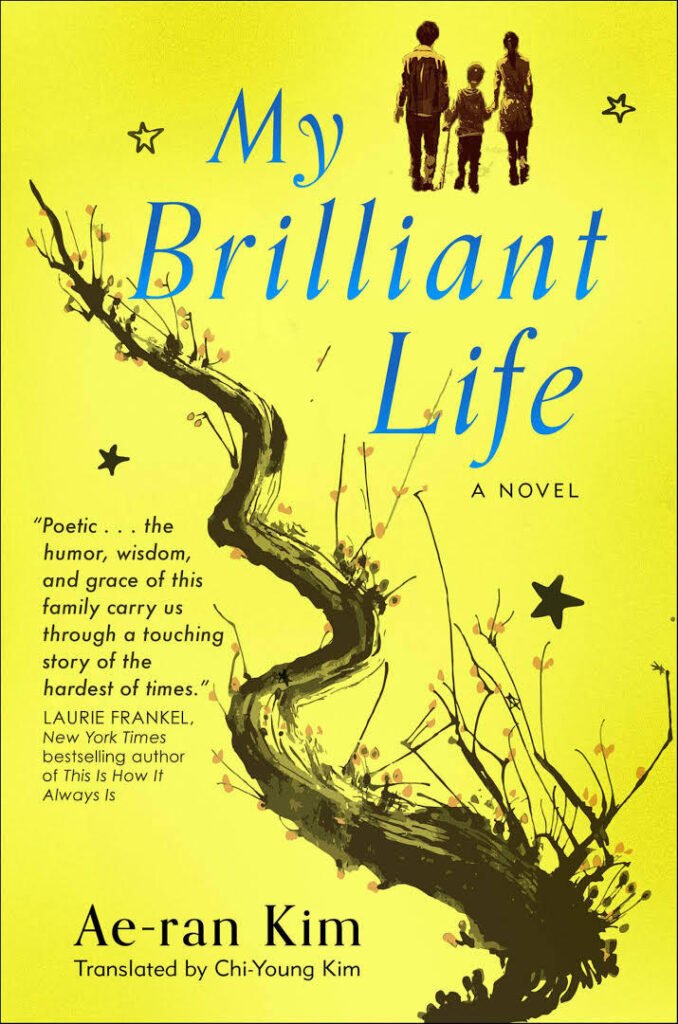
About the Author
Kim Ae-ran is one of the most celebrated contemporary writers in South Korea. Known for her sharp observations of everyday life, she has a remarkable ability to balance humor, tenderness, and emotional depth.
Her novels and short stories often focus on ordinary people navigating family relationships, uncertainty, and the challenges of modern life. Rather than grand historical events or larger-than-life heroes, Kim is interested in the quiet moments that reveal what it means to be human.
That sensitivity is on full display in My Brilliant Life, a novel that explores illness, family, and mortality with both warmth and wit.
About the Novel
My Brilliant Life tells the story of Areum, a sixteen-year-old boy living with a rare genetic condition that causes rapid aging.
Although he is chronologically a teenager, his body resembles that of an elderly man.
His parents, meanwhile, are still remarkably young. They became parents as teenagers themselves and have spent most of their lives caring for a child whose future has always been uncertain.
The novel unfolds through Areum’s voice as he reflects on his life, his family, and the people around him.
Despite the premise, this is not simply a novel about illness. It is equally a story about parenthood, sacrifice, first love, friendship, and the bonds that hold families together.
Reflections
What surprised me most was how funny the novel is.
Given its subject matter, I expected a relentlessly tragic story. Instead, Kim Ae-ran fills the book with wit, playful observations, and moments of genuine warmth.
Areum is unusually thoughtful, but he is still recognizably a teenager. He is curious about the world, occasionally sarcastic, and often wiser than the adults around him. Through his voice, the novel explores profound questions without ever feeling heavy-handed.
As a parent, I found myself thinking as much about Areum’s mother and father as about Areum himself.
Their story is not presented as heroic in the conventional sense. They make mistakes. They become exhausted. They argue. Yet their love for their son quietly shapes every decision they make.
The novel also raises an uncomfortable question that many parents would rather avoid: how much of a child’s life is truly within our control?
Areum’s condition cannot be fixed. His parents cannot save him through effort or determination. All they can do is accompany him through the time they are given together.
There is something profoundly moving about that acceptance.
What stayed with me after finishing the novel was not sadness, but gratitude.
Kim Ae-ran reminds us that a meaningful life is not measured by its length. A life can be brief, fragile, and uncertain while still being full of connection, curiosity, humor, and love.
More than ten years after dismissing it based on its title, I finally understood why this novel has remained so beloved.
It is not simply a story about dying young.
It is a story about living fully.