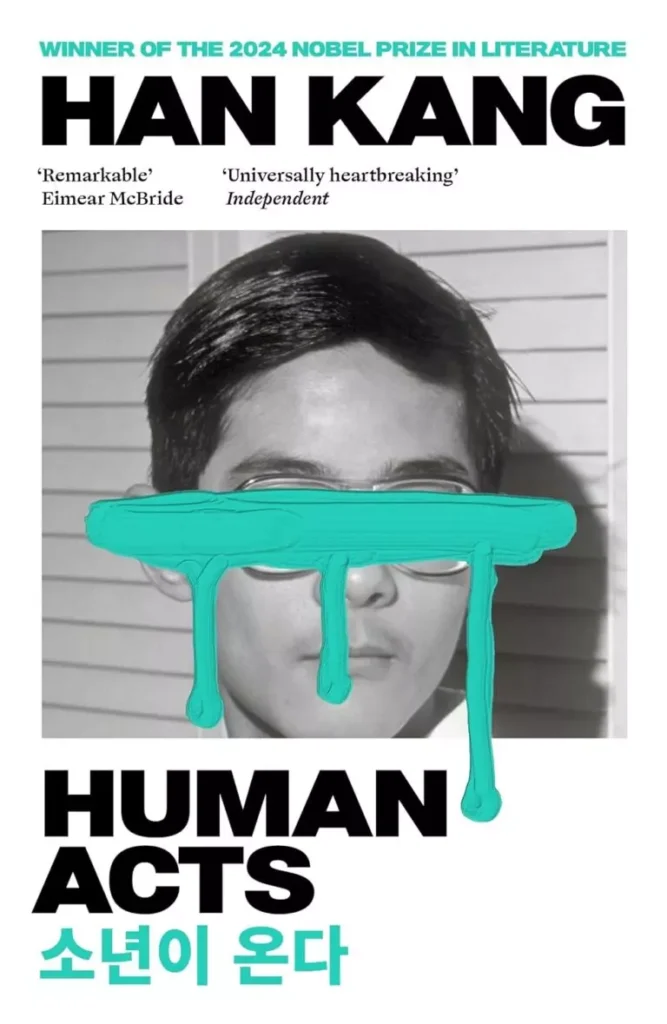
Human Acts by Han Kang (English Translation, 2016)
For readers hoping to understand modern Korean history through literature, Human Acts by Han Kang offers one deeply moving point of entry.
For many international readers, South Korea is often associated with K-pop, films, skincare, or rapid economic growth. Yet beneath that modern image lies a more painful history, one marked by political violence, collective grief, and long struggles for democracy.
To understand Human Acts, it helps to begin with the historical tragedy at its centre: the Gwangju Uprising of May 1980.
I have a friend who was born in Gwangju around three months before the Gwangju Uprising (or, the May 18 Democratic Uprising). I remember she told me that her parents covered every window with thick cotton quilts (somibul), believing that, if bullets entered the house, the quilts might offer some protection.
1. Understanding the Gwangju Uprising: Korea’s Democratic Turning Point
In May 1980, citizens in the city of Gwangju protested against military rule following a coup led by General Chun Doo-hwan.
What began as student demonstrations calling for democracy quickly escalated when soldiers were sent to suppress the protests. Witnesses later described severe violence against civilians, including beatings, shootings, and mass arrests.
As the city became increasingly isolated, ordinary citizens — students, taxi drivers, workers, parents, and shopkeepers — joined the resistance.
Hundreds of civilians were killed, and for many years the full scale of the violence remained politically sensitive and painful to discuss.
Today, the Gwangju Uprising is widely recognised as one of the defining moments in South Korea’s democratic history.
For many Koreans, Gwangju feels like more than history.
It remains memory, grief, silence, anger, and unresolved mourning — emotions carried not only by survivors, but across generations.
This emotional landscape is exactly where Han Kang’s Human Acts begins.
2. What Is Human Acts About?
Unlike a conventional historical novel, Human Acts does not unfold through one continuous plot.
Instead, it moves through a series of interconnected voices and lives shaped by the aftermath of violence.
The novel opens with Dong-ho, a young boy searching for the body of his missing friend among rows of corpses after the violence in Gwangju. From there, the narrative shifts across different characters, years, and emotional perspectives: a former factory worker haunted by torture, an editor living under censorship, survivors burdened by grief, and even the dead themselves.
Each chapter feels less like a traditional narrative and more like a fragment of memory.
Quiet. Incomplete. Painfully human.
Rather than simply documenting political events, Han Kang explores what violence leaves behind.
How do people continue living after collective trauma?
What happens when grief remains unspoken?
What does memory demand of the living?
At times, Human Acts feels almost unbearable in its intimacy. History stops feeling distant or abstract and instead becomes painfully physical — bodies, fear, shame, tenderness, and mourning.
The title itself quietly raises a profound question:
What does it mean to remain human in the face of unimaginable cruelty?
3. Reading Human Acts: Grief, Memory, and Witnessing — Beautiful, Yet Devastating
This is not an easy novel.
It is emotionally demanding, often heartbreaking, and sometimes difficult to continue reading.
And yet, I would still describe it as one of the most important introductions to Korean literature for English-speaking readers.
What stayed with me most was not only the brutality, but the tenderness.
Han Kang writes about violence with remarkable restraint.
Rather than sensationalising suffering, she approaches grief and brutality quietly, which somehow makes them feel even more devastating.
As a Korean reader, I found myself reflecting on the strange distance between national memory and emotional reality.
Many of us learn about Gwangju through school lessons: dates, historical transitions, political significance.
But literature does something history textbooks cannot.
It restores feeling.
Reading Human Acts reminded me that history is never just about politics or major events.
It lives in people’s memories.
In grief.
And in the quiet silences carried across generations.
For international readers, this novel offers something equally meaningful: a way into Korean history not through explanation alone, but through empathy.
You may finish the book unsettled.
You may feel grief, anger, helplessness, or sorrow.
But perhaps that discomfort matters.
Because Human Acts does not ask us merely to remember tragedy.
It asks us to witness it.
And perhaps witnessing is where understanding begins.