Before moving to Britain, I assumed that university was the educational milestone people cared about most.
After all, that’s largely how I grew up thinking in Korea. Conversations about education almost always ended up revolving around universities.
Living in Britain has gradually made me realise that things can work rather differently.
In fact, one of the biggest surprises for me has been how often people seem to remember — and sometimes quietly judge — each other by the secondary school they attended.
Not everyone thinks this way, of course. Britain is a diverse country, and experiences vary enormously. But after several years of living here, talking with British parents, and observing everyday life, I have come to feel that secondary school often carries a social meaning that outsiders may not immediately notice.
A Conversation That Made Me Think
Almost ten years ago, while living in another country, I happened to live in an apartment complex where many Israeli families lived.
Our children were around the same age, so I often chatted with one of the Israeli mums while the children played together in the communal garden.
One day I asked her something I had always been curious about.
Israel is a country where religion plays an important role, and Orthodox Jewish communities are easily recognised by their traditional clothing. I assumed they would naturally be among the most respected groups in society.
Her answer surprised me.
Without hesitating, she simply said, “No.”
She explained that because many Orthodox Jewish men receive exemptions from compulsory military service for religious reasons, they are sometimes viewed critically by other Israelis rather than being universally admired.
(Not every Orthodox Jew avoids military service, but exemptions for religious study have long been a subject of public debate.)
She then told me something even more interesting.
In Israel, people often ask where someone served in the military and what role they had. Serving in an elite unit can become part of a person’s identity long after military service has ended.
At the time, I found this fascinating.
Coming from Korea, I had never imagined that military service could carry that much social significance.
Years later, after moving to Britain, I began to wonder whether every country has its own version of this.
In Korea, university prestige has traditionally mattered a great deal.
In Israel, military service often carries similar weight.
And in Britain, I gradually came to feel that secondary school can sometimes play a surprisingly similar role.
The School You Attended Can Say More Than You Expect
The more British parents I met, the more I noticed that conversations about schools rarely stopped at exam results.
People often seemed to have an immediate mental picture when they heard the name or type of someone’s secondary school.
Again, these are broad impressions rather than fixed rules. Plenty of people would disagree, and individuals are far more important than the schools they attended.
Still, Britain has a long history of social class, and schools have inevitably become part of that history.
Over time, I found myself recognising some of the stereotypes that quietly exist.
Public schools
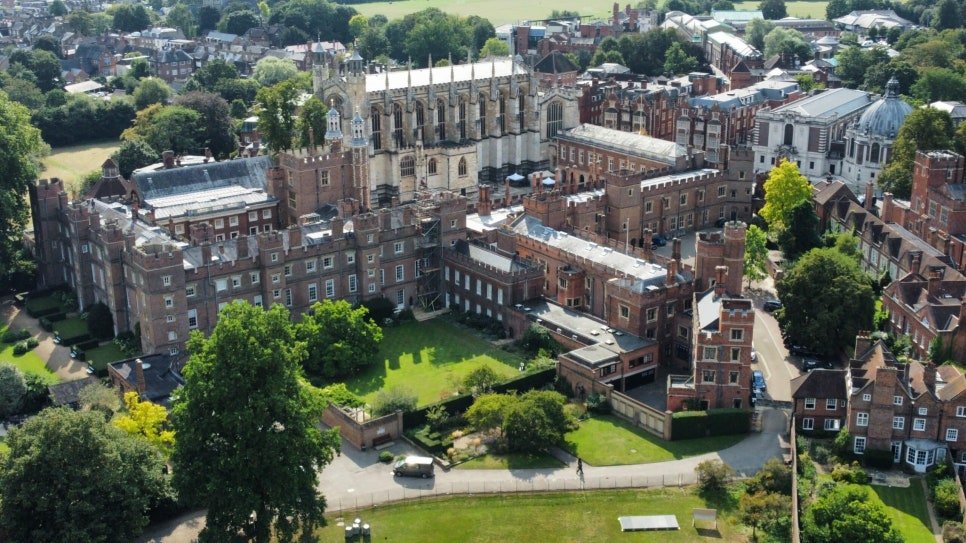
One of the first things foreigners have to learn is that a British “public school” is actually a prestigious private school.
Schools such as Eton College, Harrow School and Marlborough College have educated generations of politicians, judges, business leaders and members of the Royal Family.
Simply mentioning one of these schools often suggests privilege, wealth and long-established social connections, whether those assumptions are fair or not.
I once watched a television interview in which a British father described himself as working class and joked that if someone casually mentioned attending a public school, his first thought would be, “We’re probably not going to become close friends.”
That comment stayed with me because it summed up how these schools can still carry powerful social associations.
Grammar schools
Grammar schools are state-funded but academically selective.
They are widely associated with high-achieving students, and many people immediately assume that someone who attended one must have done very well academically.
Although grammar schools were originally intended to improve social mobility, competition has become so intense that many families now spend years preparing for the 11+ entrance examinations.
As a result, professional and middle-class families are increasingly well represented.
Independent day schools
Independent day schools generally do not have the same historic reputation as Britain’s famous boarding schools, but they often suggest a comfortable middle-class background and parents who are willing to invest heavily in education.
State schools
Most British children attend state schools, and their quality varies enormously depending on where they are.
Outstanding comprehensives in desirable neighbourhoods can produce excellent academic results and serve many professional families.
Even so, I sometimes feel that simply hearing someone attended a state school rather than a selective or independent school still leads people to make assumptions about their background.
Whether those assumptions are justified is another question entirely.
Why Parents Care So Much
Coming from Korea, I expected parents to choose schools mainly for academic reasons.
Instead, I was surprised that many conversations seemed to go beyond grades.
Parents talked about future opportunities, confidence, networks, school culture and the kinds of people their children would grow up alongside.
Of course, academic achievement still matters in Britain.
But unlike Korea, where university prestige often dominates these discussions, I sometimes feel that secondary school itself can become part of a person’s lifelong identity.
That may explain why some families make enormous financial sacrifices to send their children to private schools.
The decision is not always about believing the teaching is dramatically better.
Sometimes it is about the environment, the opportunities and the social networks their children may build over many years.
What This Means for International Families
This difference also creates challenges for families moving to Britain during their children’s secondary-school years.
Many grammar schools and selective independent schools begin their admissions process well before Year 7 starts, with places often filled months before students actually begin.
Families arriving after that point may find that their realistic options are much more limited.
For those who are planning to stay in Britain long term, choosing where to live can therefore become just as important as choosing which school to apply for.
Looking Back
Living in different countries has taught me that every society has its own invisible markers.
In Korea, people have traditionally paid close attention to university names.
In Israel, military service often becomes part of a person’s story.
And in Britain, I have been fascinated by how much meaning can sometimes be attached to secondary schools.
That certainly doesn’t mean everyone thinks this way, nor does it mean these assumptions are fair.
But it has helped me understand Britain a little better.
Sometimes the things that matter most in a society are not the ones outsiders expect.