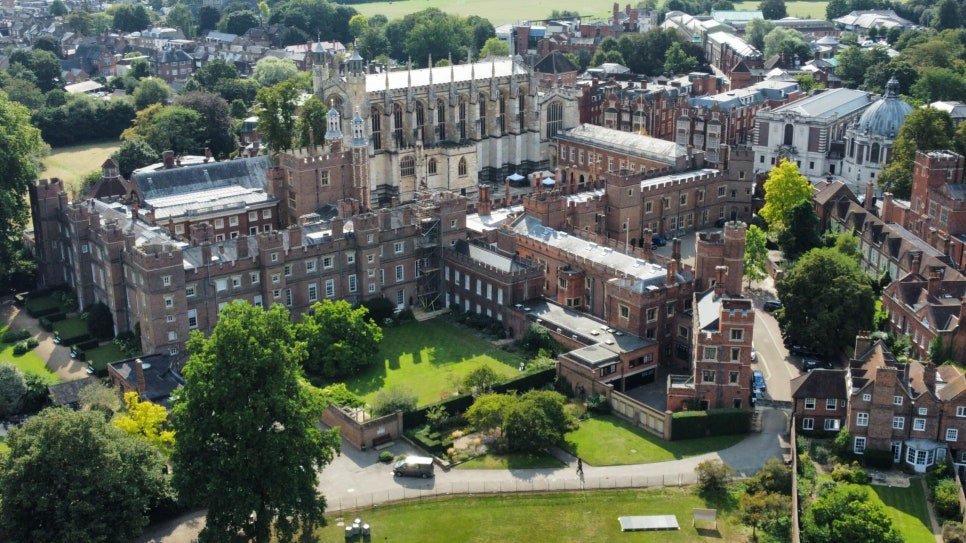
When people think of the schools that send the most students to Oxford and Cambridge, a few famous names usually come to mind: Eton, Westminster and St Paul’s.
These schools have long been associated with academic excellence, wealthy families and some of Britain’s most influential figures.
But the latest Oxbridge admissions figures tell a more interesting story.
According to the 2026 school rankings, six of the ten schools receiving the most offers from Oxford and Cambridge are state-funded institutions.
In other words, some of the most successful routes to Britain’s two most prestigious universities do not involve paying private school fees at all.
So which schools are leading the rankings, and what do these results actually tell us about British education?
Top 10 UK Schools for Oxbridge Offers in 2026
The latest figures, published in September 2026, are based on applications and offers from the 2025 UCAS admissions cycle.
The ranking is determined by the total number of offers received, rather than the percentage of successful applicants.
| Rank | School | School Type | Applications | Offers | Offer Rate |
| 1 | Westminster School | Independent | 166 | 80 | 48.2% |
| 2 | Hills Road Sixth Form College | State sixth form | 287 | 73 | 25.4% |
| 3 | Tiffin School | Grammar | 148 | 56 | 37.8% |
| 4 | St Paul’s Girls’ School | Independent | 99 | 54 | 54.5% |
| 5 | Peter Symonds College | State sixth form | 206 | 53 | 25.7% |
| 6 | Eton College | Independent | 166 | 52 | 31.3% |
| 7 | St Paul’s School | Independent | 148 | 51 | 34.5% |
| 8 | Queen Elizabeth’s School, Barnet | Grammar | 117 | 49 | 41.9% |
| 9 | Woodhouse College | State sixth form | 144 | 48 | 33.3% |
| 10 | Harris Westminster Sixth Form | State sixth form | 156 | 48 | 30.8% |
Source: Which School Advisor, September 2026, using Oxford and Cambridge admissions data for the 2025 UCAS cycle, as reported by The Spectator.
Westminster School remains at the top, receiving 80 offers from 166 applications.
But the second-highest number of offers went to Hills Road Sixth Form College in Cambridge, a state-funded college.
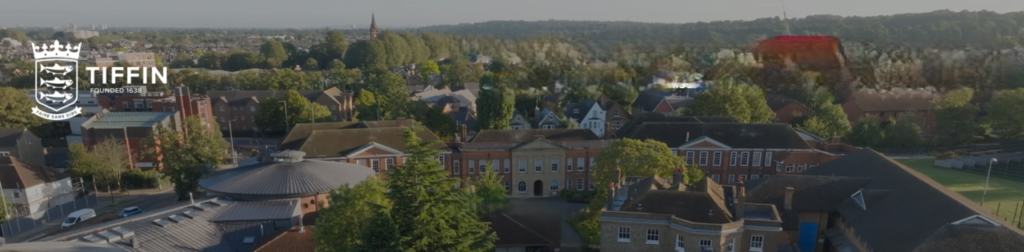
Tiffin School, a selective grammar school in Kingston upon Thames, came third, ahead of several of Britain’s most famous independent schools.
Perhaps the most striking detail is that only four of the top ten are fee-paying independent schools.
The other six are grammar schools or state-funded sixth-form colleges.
Private Schools Still Perform Exceptionally Well
It would be misleading to look at the number of state schools in the top ten and conclude that private schools no longer have an advantage.
In fact, some of the independent schools have remarkably high offer rates.
St Paul’s Girls’ School received 54 offers from just 99 applications, giving it a success rate of 54.5%.
Westminster achieved an offer rate of 48.2%, despite having considerably more applicants.
These are impressive figures, particularly when compared with the overall competition for places at Oxford and Cambridge.
However, there is an important distinction between a school’s academic performance and the academic ability of the students it admits.
Schools such as Westminster and St Paul’s are already highly selective. Their pupils have generally demonstrated strong academic ability long before applying to university.
Their Oxbridge results reflect both the quality of education they provide and the academic profile of their intake.
This makes it difficult to measure how much of their success comes from the school itself.
Grammar Schools: An Alternative to Expensive Private Education
For parents who want an academically demanding education without private school fees, grammar schools can be an attractive option.
Unlike comprehensive schools, grammar schools select pupils based on academic ability, usually through the 11-plus examination.
They are state-funded, meaning parents do not pay tuition fees.
Two London grammar schools appear in the 2026 top ten.
Tiffin School in Kingston upon Thames ranks third overall, with 56 Oxbridge offers.
Queen Elizabeth’s School in Barnet ranks eighth, with 49 offers.
Both have established reputations for strong academic results.
Further down the list, Colchester Royal Grammar School and Wilson’s School in Sutton also feature among the top 20.
For families considering grammar schools, however, there is a practical difficulty.
Admission can be extremely competitive, and entrance requirements vary between schools.
Passing the 11-plus does not necessarily guarantee a place, particularly at oversubscribed schools.
It is also worth remembering that grammar schools are not available in every part of England.
Where a family lives can therefore make a considerable difference to the educational options available to their children.
Sixth-Form Colleges: A Second Chance to Choose a Different School
One of the most interesting features of the British education system is that students do not necessarily remain at the same school throughout their secondary education.
After completing their GCSEs at around 16, they can apply to a different sixth form or college for their A-level studies.
This creates another opportunity for students who develop academically later or decide to aim for more competitive universities.
The 2026 rankings show just how successful some sixth-form colleges have become.
Hills Road Sixth Form College in Cambridge received 73 offers, placing it second nationally.
Peter Symonds College in Winchester came fifth with 53 offers.
Woodhouse College in Finchley and Harris Westminster Sixth Form also made the top ten.
These institutions demonstrate that strong university preparation is not confined to traditional private schools.
Some have extensive experience supporting Oxbridge applicants, including guidance on personal statements, admissions assessments and interviews.
But there is a catch.
Many high-performing sixth forms have demanding GCSE entry requirements, especially for popular A-level subjects.
So although they are free to attend, gaining admission may be far from easy.
The School with the Most Offers Isn’t Necessarily the Most Successful
League tables can be misleading if we look only at the rankings.
The 2026 table is based on the total number of offers, which naturally favours larger schools and colleges with more applicants.
Consider these three schools:
| School | Applications | Offers | Offer Rate |
| Hills Road Sixth Form College | 287 | 73 | 25.4% |
| St Paul’s Girls’ School | 99 | 54 | 54.5% |
| King’s College London Mathematics School | 68 | 38 | 55.9% |
Hills Road received the most offers of the three, but St Paul’s Girls’ and King’s College London Mathematics School achieved much higher offer rates.
King’s College London Mathematics School is particularly interesting.
Despite ranking only 17th by total offers, it achieved a 55.9% offer rate, the highest among the top 20 schools.
Meanwhile, King Edward VI High School for Girls in Birmingham recorded an even higher rate of 71.4%, although that was based on just 21 applications.
So which school is actually performing better?
There is no straightforward answer.
A high number of offers suggests that a school has considerable experience preparing students for competitive university admissions.
A high offer rate suggests that a large proportion of its applicants were successful.
But neither figure tells us everything about the students, their chosen subjects or the academic selection process at the school.
And an offer is not necessarily a confirmed place. Students may still need to achieve the required A-level grades.
Why Are So Many Top Schools in London and the South East?
Another striking feature of the 2026 rankings is their geographical concentration.
Of the top 20 schools, 13 are in London, five are in the South East and two are in the East of England.
Across the wider top 80, London accounts for 33 schools, with another 21 in the South East.
That means more than two-thirds of the schools on the list are concentrated in these two regions.
This raises interesting questions about educational opportunity in Britain.
London and the South East contain many of the country’s most academically selective schools, prestigious independent institutions and specialist sixth-form colleges.
They also attract families who are willing and able to make considerable financial and practical commitments to their children’s education.
Of course, school location is not the whole story.
Some independent boarding schools recruit students nationally and internationally, while certain sixth-form colleges attract applicants from well beyond their immediate neighbourhoods.
Nevertheless, the geographical imbalance is difficult to ignore.
For families living elsewhere in the country, the range of highly selective educational institutions may look quite different.
What Has Changed in the Latest Rankings?
Although Westminster remains number one, several other schools have moved significantly.
Tiffin School has climbed to third place, becoming the highest-ranked grammar school.
St Paul’s Girls’ School has risen to fourth, increasing its offer total from 48 to 54.
Woodhouse College has also entered the top ten.
Meanwhile, Queen Elizabeth’s School in Barnet has dropped from second to eighth, and Brampton Manor Academy has moved out of the top ten to 11th.
These changes are worth noting, but they should be interpreted carefully.
A school’s position can fluctuate considerably from year to year depending on the number of applicants, the subjects they choose and the academic strength of each cohort.
A fall in the rankings does not automatically mean that teaching standards have declined.
Equally, a sudden rise does not necessarily mean a school has become dramatically better.
For parents, results over several years are likely to be more informative than a single year’s ranking.
Should Parents Choose a Secondary School Based on Oxbridge Results?
Living in England with school-age children has made me realise how much attention British parents can give to secondary school choices.
For some families, the question of which university a child might eventually attend begins surprisingly early.
Grammar school entrance examinations, catchment areas, GCSE performance and sixth-form options can all become part of the conversation years before university applications.
But I would be cautious about choosing a school simply because it sends a large number of students to Oxford or Cambridge.
Academic results matter, of course.
Yet so do the atmosphere of the school, the level of academic pressure, the support available to students and whether a child would genuinely thrive there.
A highly competitive school may be ideal for one child and overwhelming for another.
And Oxford and Cambridge are not the only universities where students can receive an excellent education or build successful careers.
Perhaps the most encouraging message from the latest rankings is that there is more than one route to academic success in Britain.
Some students attend famous private schools. Others go to grammar schools, comprehensive schools or specialist sixth-form colleges.
A private education can offer significant advantages, but it is certainly not the only route to Oxford or Cambridge.
For parents navigating the British school system, understanding those different pathways may be more valuable than simply knowing which school tops the league table.
Data source: Which School Advisor – The UK’s Top Schools for Oxbridge Offers, updated 22 September 2026. The 2026 ranking uses application and offer figures from the 2025 UCAS admissions cycle, originally published by The Spectator using Oxford and Cambridge admissions data.