If someone told me I had to survive on one food for the next three years, stranded on a desert island, I would not hesitate for a second.
I would choose kimbap (Gimbap).
Not steak. Not pasta. Not pizza.
Kimbap.
For many Koreans, kimbap is comfort food, picnic food, childhood nostalgia, and everyday food all rolled into one.
Growing up in Korea, school trips usually meant one thing: homemade kimbap.
Almost every child arrived with kimbap sliced into bite-sized pieces, packed in lunchboxes, ready to eat and easy to share.
Sports day? Kimbap. Family road trip? Kimbap. Long train ride? Also kimbap.
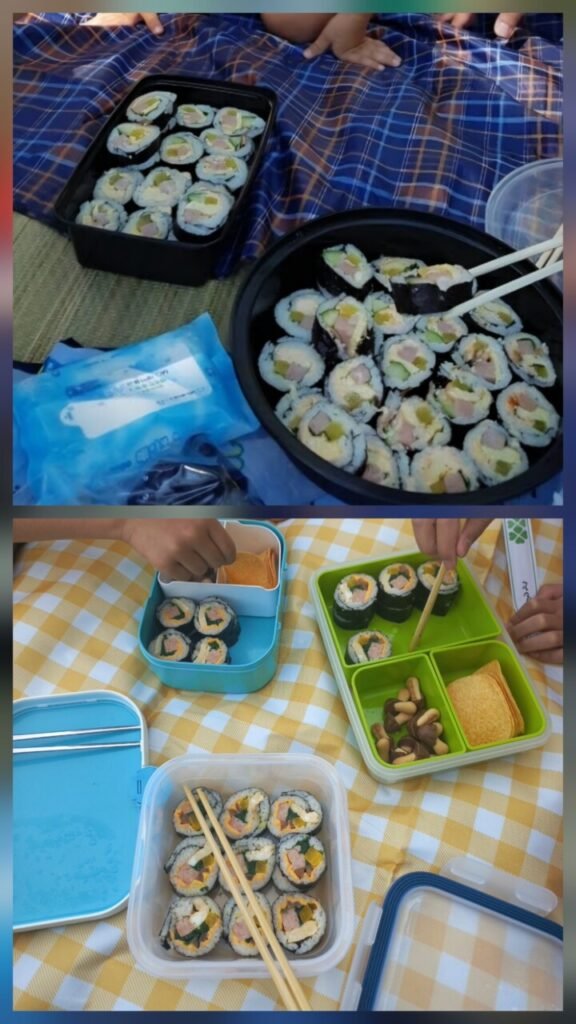
At one point during my office-worker years in Seoul, I used to arrive at work too early to bother with breakfast at home. So I would stop at the cafeteria and buy a roll of kimbap in the morning — cheap, quick, filling, familiar.
Yes, Koreans eat kimbap for breakfast too.
That is how ordinary kimbap is in Korean life.
And yet, after living across several countries and cooking for friends from different backgrounds, I noticed something surprising:
Many people outside Korea think kimbap and sushi are the same thing.
I understand why.
Japanese food became globally popular earlier, and from a distance both look like seaweed-wrapped rice rolls sliced into neat circles.
But to Koreans — and I suspect to many Japanese people too — they feel as different as burgers and sandwiches.
I love both.
I genuinely do.
I love sitting in a sushi restaurant with fresh sushi, a cold Japanese beer, or a glass of Chardonnay.
But if I ordered sushi and someone served me kimbap instead, I would feel confused.
And if I desperately wanted kimbap and someone gave me sushi?
Honestly, I might cry a little.
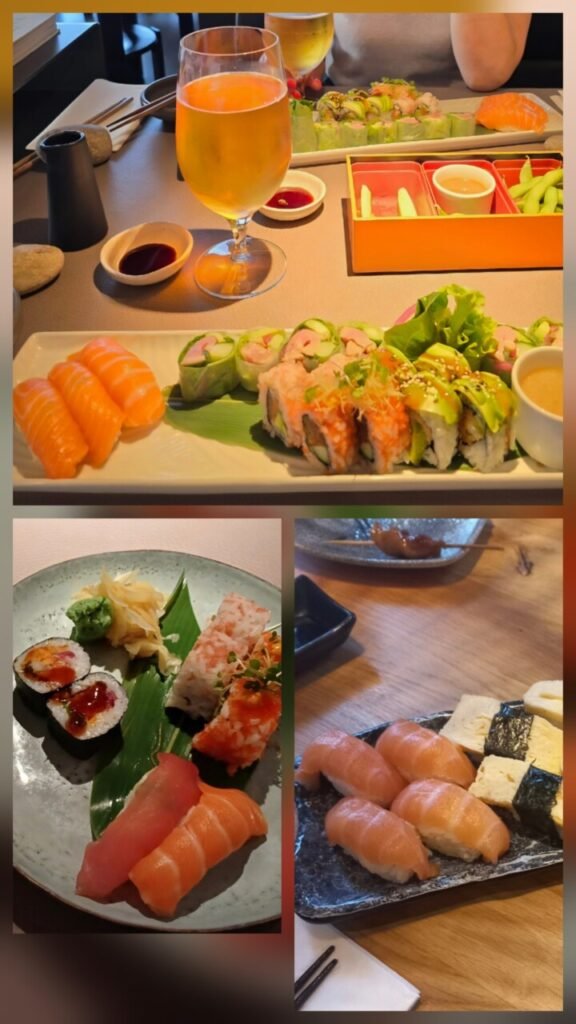
So What’s the Difference Between Kimbap and Sushi?
1. Kimbap uses cooked, seasoned ingredients
This is the biggest difference.
In kimbap, everything inside is already cooked and seasoned.
Egg, spinach, carrots, pickled radish, fish cake, marinated beef, tuna mixed with mayo, cheese, stir-fried vegetables — the fillings are prepared in advance and layered together.
Sushi, on the other hand, often highlights freshness and minimal preparation.
Raw fish, lightly prepared or raw vegetables, minimal seasoning.
Of course, sushi is a huge category and not all sushi contains raw fish. But the overall philosophy feels different.
Kimbap is hearty.
Sushi is delicate.
Kimbap feels like a meal your mum packed.
Sushi feels like something someone carefully plated.
Popular types of kimbap include:
- Classic kimbap (egg, pickled radish, spinach, carrot, fish cake or ham)
- Bulgogi kimbap
- Tuna kimbap
- Cheese kimbap
- Pork cutlet kimbap
- Spicy anchovy kimbap
- Salad kimbap packed with crunchy vegetables
In Korea, there are entire restaurants dedicated only to kimbap.
Yes — just kimbap.
2. Kimbap is not a cold food
This confuses many people.
Kimbap is not really meant to be eaten cold. It is best fresh, at room temperature, or even slightly warm.
Because sushi is refrigerated and served cold, many assume kimbap should be too.
But kimbap feels closer to freshly made, warm food.
Why?
Because the ingredients are cooked.
Kimbap and refrigerators are not particularly close friends.
The rice hardens. The texture changes. The flavour becomes sad.
I know frozen kimbap has recently become trendy in places like the U.S. (I have heard people rave about frozen kimbap at Trader Joe’s — the kind that disappears from shelves, shows up all over social media, and somehow turns into a supermarket treasure hunt), and I have even started spotting it in Britain.
But if you ask most Koreans, frozen kimbap is more of an emergency solution than an ideal experience.
Fresh kimbap is the real thing.
This is also why Korean children commonly bring kimbap on picnics or school outings.
Sushi lunchbox for a six-year-old?
That would raise questions.
3. Sushi needs soy sauce and wasabi. Kimbap doesn’t.
With sushi, soy sauce and wasabi are part of the experience.
Kimbap?
Not really.
Because each ingredient is already seasoned before being rolled together, kimbap is designed to be eaten as it is.
No dipping sauce required.
No soy sauce.
No wasabi.
Just pick it up and eat.
Is Kimbap Cheaper Than Sushi?
Generally, yes.
Sushi often feels like a restaurant occasion.
Kimbap feels casual.
A quick lunch.
Something to grab between errands.
Something you eat on trains, after school, or when you are too tired to cook.
In Korea, one roll of kimbap is roughly a meal for one person, though hungry adults often eat one and a half or two.
And compared with sushi, kimbap is usually much cheaper.
Basic kimbap in Korea can cost surprisingly little, while premium versions with better ingredients are still relatively affordable.
Nobody orders kimbap to impress someone.
You order kimbap because you are hungry.
And because it tastes good.
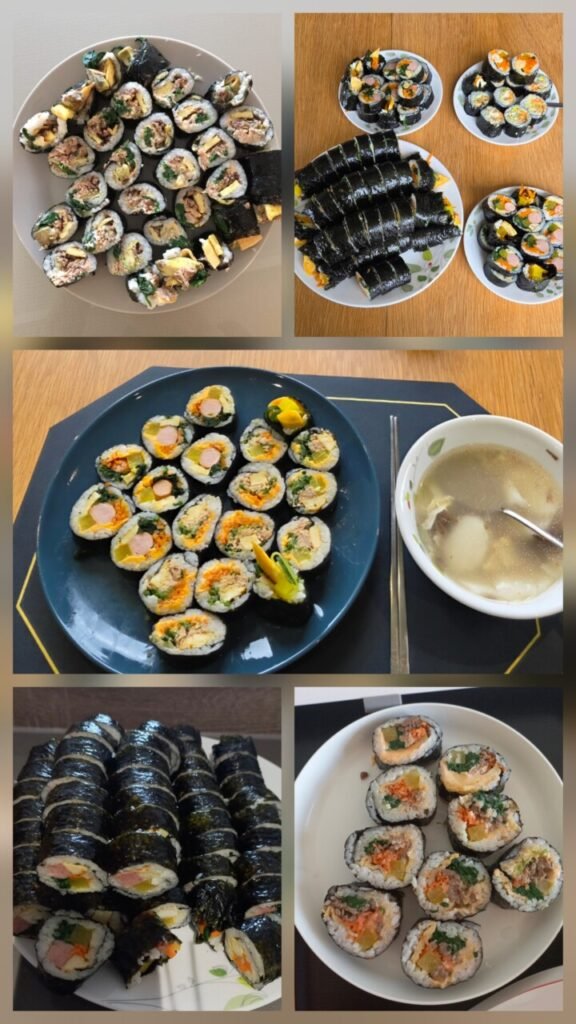
What I Miss Most Abroad
I have lived in several countries and genuinely enjoy living overseas.
But one thing I still miss?
Good, affordable kimbap.
The kind sold in tiny neighbourhood shops in Korea.
Made fresh.
Slightly warm.
Wrapped in foil or paper.
Cheap enough to buy every day without thinking twice.
You do not realise how comforting ordinary food is until you cannot easily get it anymore.
And yes — I still love sushi.
I just wish the world would stop calling kimbap “Korean sushi.”